
29.05.2026
Legal compliance in producer countries is a necessary starting point — but it is rarely enough, on its own, to unlock market access. This roundtable asks how that gap can be closed, and what it takes to turn governance progress into commercial trust.
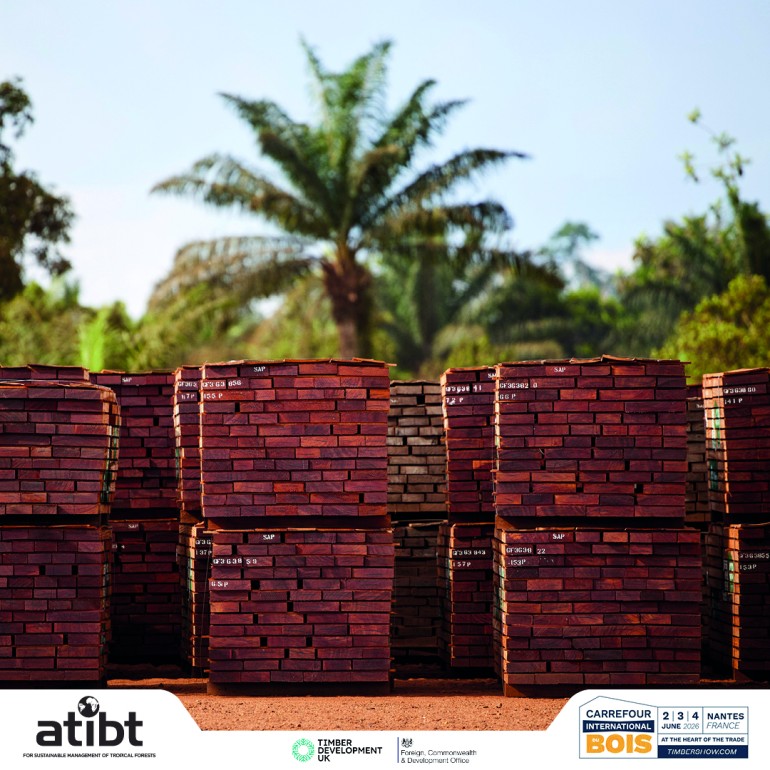
On Tuesday, June 2nd, from 11:00 to 12:30 in Canopée 2, ATIBT co-organises with Timber Development UK (TDUK) a roundtable that goes to the heart of one of the sector's most persistent challenges: the distance between what producer countries can demonstrate and what importing markets are prepared to recognise.
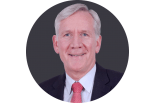
The session is moderated by David Hopkins (TDUK) and brings together a line-up spanning the full supply chain: Richard Gyimah (Ghana Forestry Commission), Emily Fripp (Efeca / Broader Market Recognition Coalition), Robbie Weich (Tradelink, importer perspective), Tom van Loon (Interholco, producer perspective) and Françoise Van de Ven (ATIBT, Code of Conduct). The central question: how can national legality and traceability systems be trusted, recognised and integrated into international due diligence frameworks?
As the EUDR reshapes the conditions of timber trade, the conversation is shifting from compliance to competitive advantage. For producer countries, the challenge is to show that legal, traceable supply is also commercially credible. For importers, it is to build sourcing relationships on solid, auditable foundations. A particular focus will be placed on Ghana's experience with the Ghana Timber Legality Assurance System (GTLAS) and lessons from FLEGT licensing.
The session will also highlight ATIBT's ongoing work on a Code of Conduct for trade associations, designed to reinforce transparency and responsible sourcing across the sector, and to bridge the gap between producer countries and international markets. A networking lunch follows the roundtable.
Organised by ATIBT and Timber Development UK (TDUK) · FGMC2 programme, funded by the UK Government
Contact: info@atibt.org