
09.01.2026
At the end of December 2025, the ADEFAC (to support the development of continuing education in the forestry and timber sector in Central Africa - ADEFAC 1) project came to an end after nearly six years of implementation. Led by the Network of Forest and Environment Training Institutions in Central Africa (RIFFEAC) in collaboration with ATIBT, this project, funded by the French Development Agency, aimed to contribute to the sustainable management of tropical forests by establishing a long-term continuing education programme in the forestry and timber sector.
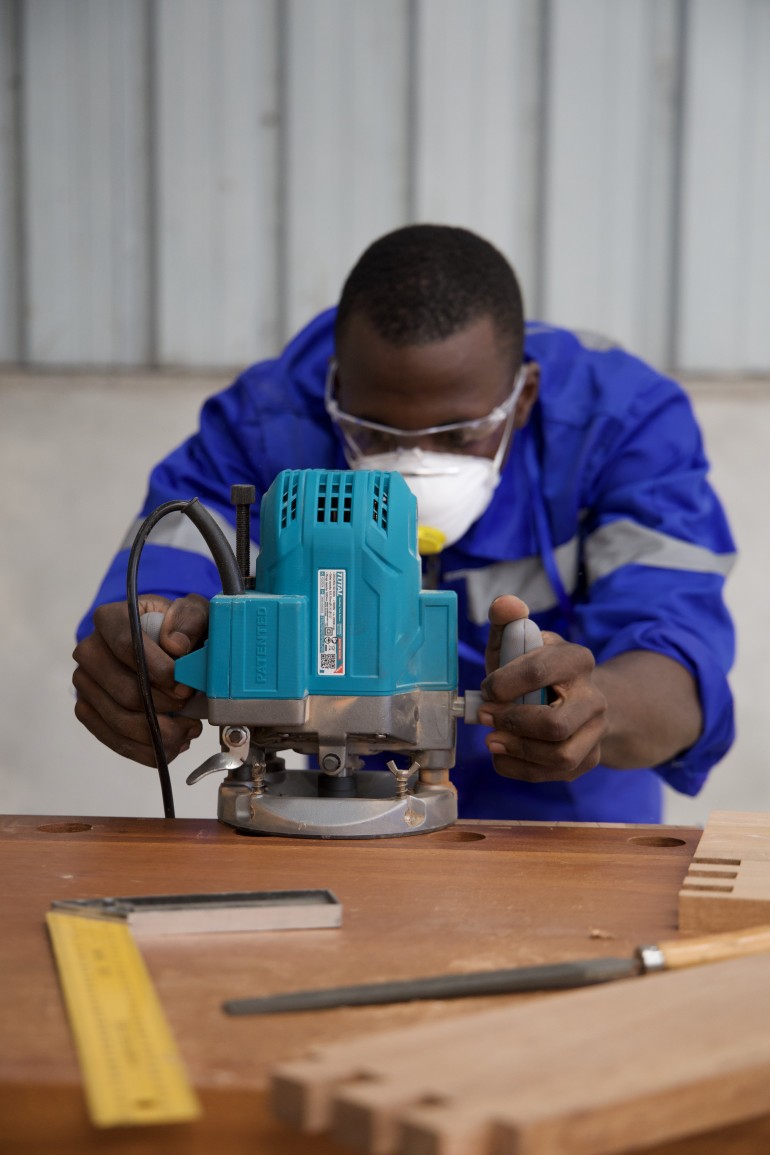
Deployed in Cameroon, Congo, Gabon and the DRC, the various activities carried out since 2020 have yielded significant results, in particular the launch of a co-management approach to continuing vocational training through working groups bringing together the training sector, professionals and government agencies.
Companies and their professional organisations are becoming more involved in steering the training process, participating in joint working group discussions and considering the conditions for ensuring the sustainability, funding and quality recognition of training.
A pool of more than 190 trainers has been equipped to develop continuing vocational training modules after trainer training, followed by thematic support for module development.
42 modules have thus been developed and tested in 14 training centres and institutions in Central Africa, for more than 612 learners, in response to the needs expressed by professionals. Log grading and cubing, lacquer finishes, calculating the cost price of a wooden structure, negotiating social clauses, artificial drying, programming automated machines, maintaining carpentry cutting tools, forest mapping applied to georeferenced inventories, preventive forklift truck driving, production and processing of forest seedlings in nurseries, etc. are all training topics offered in the project's partner institutions and centres.
Human resources and skills management tools as a lever for performance have been introduced or reinforced in large companies through training, coaching and webinars. Micro, small and medium-sized enterprises and craft organisations have also been supported in their structuring.
Careers in the forestry and timber sector have been promoted through various initiatives: nine career videos; around thirty career and skills fact sheets; presentations at round tables and national and international events; and the organisation of the first Central African Cabinetmaking Grand Prix in Pointe-Noire in July 2025. A guide to the local use of Central African timber was published and made widely available to stakeholders in the sector.
The ADEFAC 1 project, completed at the end of December 2025, will be extended with a second phase scheduled to start in early 2026. The ADEFAC2 project will consolidate the achievements of the first phase and address the challenges of conservation, exploitation and sustainable management of Central African forests by improving employability in the forestry and timber sector. At the heart of this second phase is the further development of the actions carried out during the first phase, in particular the creation of a high-quality continuing vocational training programme, supported by training institutions in Central Africa, in response to the needs of professionals in the sector and co-developed/co-managed by all stakeholders.
By coordinating with various initiatives, ADEFAC positions ATIBT as a key player in steering vocational training and skills development in the forestry and timber sector, promoting the sustainability of tropical forests and the tropical forestry and timber sector.