
30.01.2026
ATIBT is revitalizing stakeholders in the domestic timber value chain through a workshop organized in Pointe Noire, aimed at making legal timber a driver of growth, innovation, and sustainability for the Republic of Congo, as part of the Internal Timber Market (MIB) project funded by the European Union.
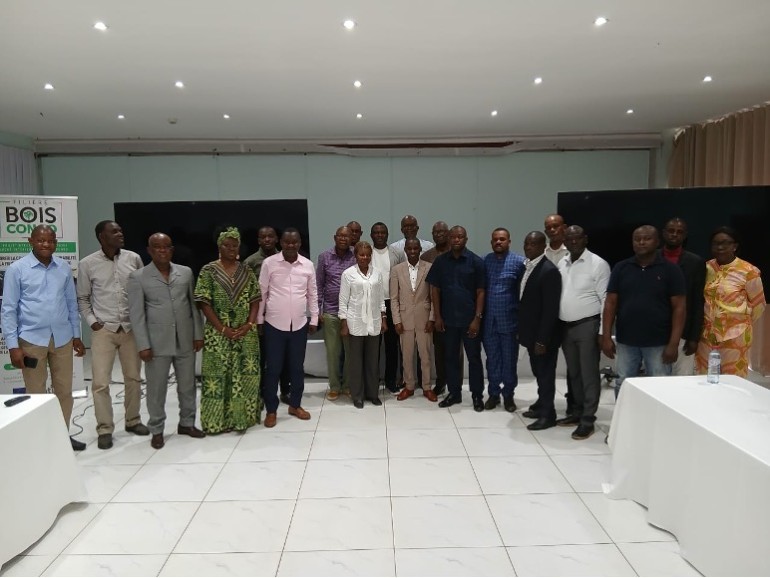
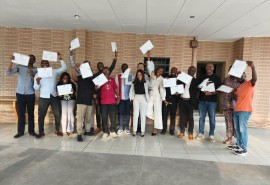
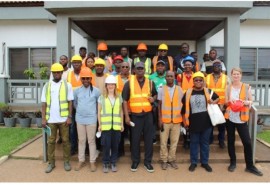
As part of the implementation of the MIB Congo project, on Tuesday, January 20, 2026, in Pointe Noire, the ATIBT organized a workshop bringing together players in the domestic timber value chain and the various administrations concerned.
The MIB Congo project is part of the government and its partners' desire to structure the national timber industry in order to make it competitive and sustainable. It aims to strengthen the supply of legal timber to the domestic market, while creating win-win economic opportunities between large companies, SMEs, and wood craftsmen.
The objectives of the Pointe Noire workshop were to:
· Prepare large companies to supply the domestic market with legal timber.
· Raise awareness among stakeholders of potential sources of supply for the domestic market in legal timber
• Raise awareness among SMEs and artisans of the identification and use of lesser-known species (LKTS).
• Promote the use of short-length sawn timber and new processed products (glued laminated panels).
• Promote the recovery of waste from logging and processing units.
• Encourage win-win partnerships between large companies and SMEs/artisans.
The workshop began with a welcome address by ALAIN BERTIN TIOTSOP, ATIBT Congo representative, and the opening of proceedings by the representative of the Director of Forest Resource Development.
Armand DIAMVINZA acted as moderator.
The workshop was structured around two presentations:
· “Promoting connections between large companies and SMEs (including artisan carpenters) through win-win business opportunities”
· “Alternative sources to artisanal logging on domestic timber markets - By-products of logging and industrial processing”
The following points were discussed:
· The low participation of large companies;
· The almost total absence of supplies of products from large companies on the MIB.
· The availability of new glued laminated products on the MIB at reasonable costs.
· The legalization of artisanal sawyers.
· Obtaining dried sawn timber.
· Standardization of MIB wood products.
· Companies' wood selling prices.
· High transportation costs.
· Difficulties in finding approved transporters.
· Parafiscal charges imposed on very small and small enterprises.
Main recommendations issued:
· Accelerate the process of drafting legislation regulating the exploitation of small forestry permits;
· Continuously disseminate the regulatory texts governing the exploitation of domestic wood;
· Encourage and motivate large companies to improve their involvement in the development of the MIB through sawn products and by-products;
· Promote wood waste from logging and primary processing;
· Define incentives to support actors in the domestic timber value chain;
· Establish a mechanism for standardizing semi-finished and finished products.
“The MIB Congo project is a key step in building a sustainable, competitive, and inclusive national wood industry. By connecting large companies with micro, small, and medium-sized enterprises and artisans, it paves the way for a structured, value-creating, and environmentally friendly domestic market.”
The MIB Congo project is funded by the European Union.