
30.01.2026
Professional timber associations join forces to co-develop a common code of conduct as part of the TTT project
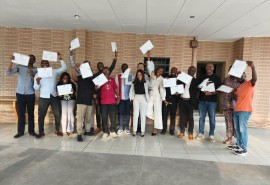
On 27 January 2026, the main professional associations in the timber sector in the Congo Basin, French, British and European associations, and the Chinese association partnering with the project, CTWPDA, came together for an initial workshop as part of the Tropical Timber Trade Facility (TTT) project.
The aim? To jointly develop a template for a professional code of conduct that will strengthen the legality, traceability and sustainability of the tropical timber trade.
Funded by the German government (BMZ) and implemented by GIZ, the TTT project aims to reduce illegal deforestation and develop legal and sustainable trade in tropical timber from the Congo Basin to China and global markets. This unique initiative supports professional associations and pilot companies in the Congo Basin and CTWPDA in China by promoting a better understanding of international requirements (EUDR, FLEGT, etc.) and increased dialogue between stakeholders. ATIBT is coordinating the joint development of a template code of conduct.
The approach adopted is distinguished by its pragmatism and respect for the specific characteristics of each association. Rather than imposing harmonisation, the aim is to create a flexible template with progressive levels of commitment. This template will serve as a source of inspiration to enrich existing codes of conduct, allowing each association to progress at its own pace according to its own challenges, capabilities and operational context.
In concrete terms, the template will offer:
This modular approach ensures that each association can adopt the template without feeling constrained, while benefiting from a clear vision of best practices in the sector. The idea is not to standardise, but to create a dynamic of continuous improvement where everyone can progress according to their priorities and realities on the ground. Each association remains free to adapt the template to its specific challenges while participating in the collective raising of standards in the sector.
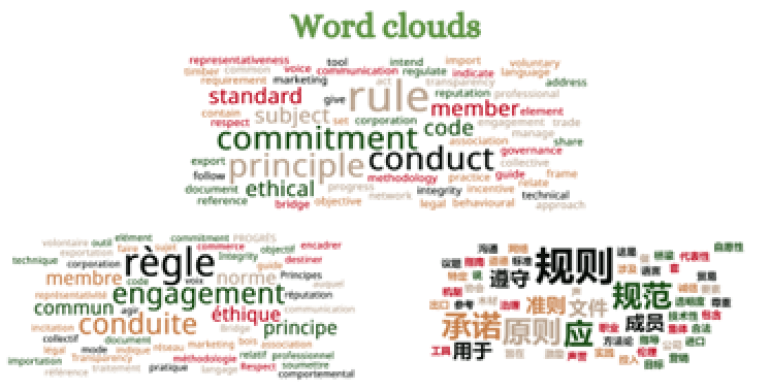
During the workshop, participants shared their vision of an ideal code of conduct through an interactive word cloud exercise. The concepts that emerged most strongly were: rules, commitment, transparency, traceability, responsibility, legality, sustainability, quality. These fundamental values will guide the drafting of the common template and reflect the sector's collective commitment to greater professionalism.
The workshop also provided an opportunity for a collective SWOT analysis, highlighting the strengths of the timber sector and the challenges to be addressed. The sector has solid strengths: recognised expertise, tropical timber of exceptional quality and real markets, particularly in Asia. Supported by active professional networks and a public commitment to development, it has strong economic potential.
In a changing international context, several structural challenges have been identified, including adaptation to regulatory frameworks (EUDR, Lacey Act etc.), consumption habits and negative perceptions associated with tropical timber.
Transparency, responsible approaches and cooperation between stakeholders thus appear to be key levers for consolidating markets and supporting the sustainable development of the sector.
This workshop demonstrated the willingness of professional associations to work together while preserving their identity and specific characteristics. By pooling their expertise and sharing their best practices through a modular template, they are laying the foundations for a more responsible and transparent tropical timber sector that is better positioned on international markets. This tiered approach ensures that each stakeholder, regardless of their starting point, can progress at their own pace. This first workshop marks the beginning of a collaborative process that will continue until September 2026.