
06.03.2026
On 24 February 2026, ATIBT took part in a strategic meeting held in Paris with the UIC Track Expert Group, alongside the European Timber Industries Confederation (ETIC), SNCF Réseau, and the companies Impregna and Durwood.
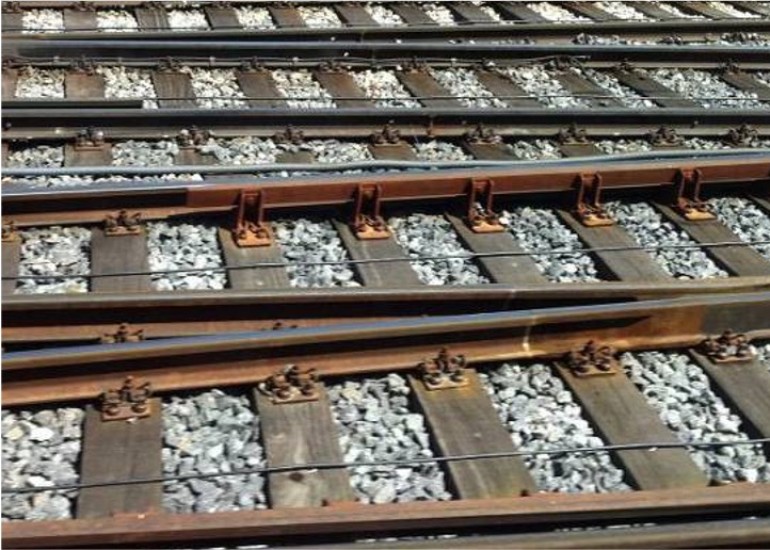
This meeting brought together technical managers from the largest railway companies in Europe and around the world to address a central issue: the future of wooden sleepers in the context of ecological transition, stricter regulatory requirements, and infrastructure decarbonisation.
The UIC: A key player in global railway cooperation
The International Union of Railways (UIC) is the worldwide organisation for railway cooperation. It brings together the main railway undertakings and infrastructure managers to harmonise technical standards, promote innovation, and support the sustainable development of rail transport globally.
UIC plays a structuring role in the development of technical standards, the dissemination of best practices, and the coordination of strategies related to safety, performance, and environmental responsibility. At a time when rail is expected to become a major pillar of low-carbon mobility, its technical expert groups provide a decisive platform for exchange.
The 24 February meeting was fully aligned with this objective: to examine the role of wood in modern railway infrastructure in light of new environmental and industrial constraints.
SNCF Réseau: A strategic commitment to wood
SNCF Réseau delivered a clear message: wood remains the exclusive complement to concrete sleepers on the French railway network.
This choice is based on several fundamental considerations:
Each year, the French network uses between 300,000 and 400,000 wooden sleepers, confirming their structural role within the infrastructure.
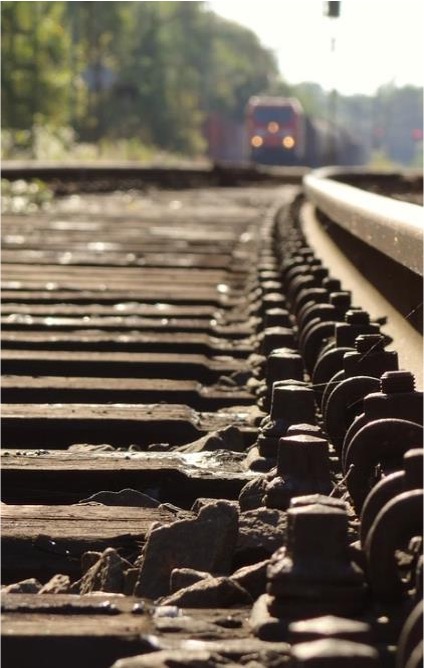
A key topic discussed during the meeting was the evolution of preservation treatments. After ten years of research (€3.5 million invested) and the commissioning of a new industrial facility (€6.5 million), SNCF now operates the largest copper oil treatment plant in Europe. Since January 2026, creosote is no longer used on the French network.
The new solutions offer decisive advantages:
The environmental argument therefore extends beyond the raw material itself to encompass the entire treatment lifecycle.
ETIC: Representing european timber industries.
Established in 2021 and based in Brussels, the European Timber Industries Confederation (ETIC) represents different European forest industries. It brings together 18 members, including 11 sector federations, private companies, and academic partners.
ETIC promotes:
Within the framework of the European Green Deal and the EU Forest Strategy 2030, the European Commission has set ambitious targets: reducing emissions by 55% by 2030 and achieving carbon neutrality by 2050. Wood is identified as a central decarbonisation lever:
The timber sector thus contributes to the European bioeconomy without causing deforestation. Sustainable forest management ensures that forests remain healthy while continuing to regenerate.
Wooden sleepers: A technical solution fully aligned with today’s needs, presented by Impregna and Durwood.
Wooden sleepers are sometimes perceived as a legacy solution. The discussions of 24 February clearly demonstrated that they represent a technical solution perfectly suited to current demands.
1. Mechanical performance and adaptability
Wood offers several operational advantages:
Unlike concrete, which fails in a brittle and sudden manner, wood provides progressive deformation, reducing the risk of abrupt failure. This feature is particularly strategic on imperfect subgrades.
2. A genuine economic advantage
Cost comparisons were addressed rigorously.
Comparing a timber turnout bearer to a plain-line concrete sleeper is not relevant. For equivalent applications (turnout vs turnout), timber can be 2 to 5 times less expensive than concrete or composite (FFU) solutions.
The relevant criterion is life-cycle cost per turnout, not the theoretical lifespan of the material alone. In practice:
Composites, although mechanically durable, involve:
By contrast, timber:
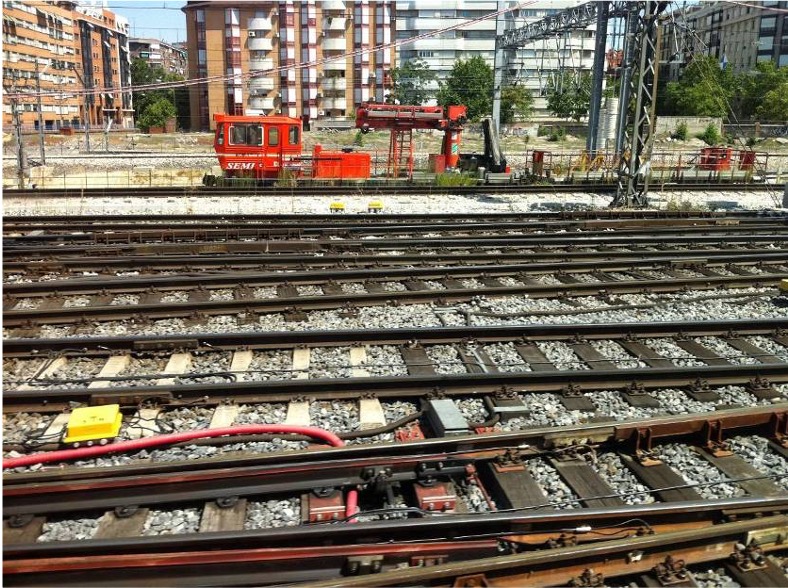
Tropical timber: A strategic resource requiring no additional treatment
In this context, ATIBT’s contribution is particularly significant.
Certain naturally durable tropical species offer exceptional properties:
These characteristics may reduce or even eliminate the need for heavy additional treatment, while ensuring high technical performance. Tropical timber therefore provides a structurally robust solution in demanding environments.
Beyond technical performance, the issue is also socio-economic and environmental.
1. Enhancing the value of sustainably managed tropical forests
Tropical timber sourced from certified or sustainably managed concessions enables:
Sustainable management is a conservation tool: a responsibly managed forest retains its economic value and is therefore less likely to be converted.
Twelve tropical timber species are currently listed in SNCF’s “wooden sleeper” reference framework.
2. Maintaining employment and local economies
The tropical timber sector supports:
By integrating sustainably sourced tropical timber into railway supply chains, infrastructure managers contribute to maintaining structured, legal, and traceable value chains.
The raison d’être of tropical timber in this sector is therefore not limited to its technical performance: it supports a model that combines conservation, development, and employment.
A material aligned with the 2050 horizon
Looking toward carbon neutrality:
In a long-term regulatory perspective, high embodied-energy materials may become environmental liabilities. Timber, by contrast, is aligned with European climate trajectories.
Conclusion: A future-oriented solution proven by time
The UIC meeting on 24 February confirmed a fundamental point: wooden sleepers are not a residual solution but a strategic, technical, and climate-conscious choice.
Thanks to innovations in preservation technologies, strong mechanical performance, economic competitiveness, and contribution to decarbonisation, wood meets contemporary challenges.