
13.02.2026
The European Union Deforestation Regulation (EUDR) is a major step forward in the fight against imported deforestation. For the tropical timber sector, it represents both an operational challenge and an opportunity to capitalize on long-standing efforts in terms of legality, traceability, and sustainable management. Provided that its implementation takes into account the realities of producer countries, the EFD can become a structuring lever for the preservation of tropical forests.
We are reposting an article written by Lydia Afriyie-Kraft, Astrid Zabel, and Thomas Breu, published on Elsevier.
A shared goal, a collective responsibility
The objective of the EUDR is clear: to prevent products derived from deforestation or forest degradation from entering the European market. This objective is widely shared by tropical timber-producing countries, many of which have, over the years, developed regulatory frameworks and practices based on sustainable forest management, the fight against illegal logging, and the traceability of timber flows.
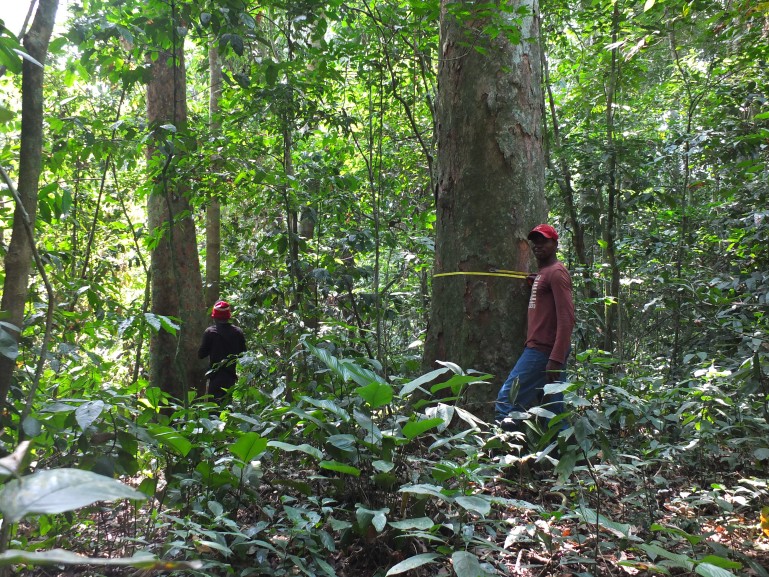
In the Congo Basin, the forestry sector relies in particular on the managed concession model, management plans, forest inventories and, for some operators, certification. These measures have helped to maintain high forest cover while generating economic and social benefits for states and local populations.
Strict requirements that mainly affect the upstream sector
The implementation of the EUDR is based on demanding due diligence obligations, founded on the collection and transmission of a large volume of data (geolocation, legality, administrative documents, traceability, proof of zero deforestation). While these obligations formally apply to operators placing products on the European market, their implementation relies heavily on producers and processors in the countries of origin.
A recent analysis published in ScienceDirect – “Dealing with the cost of EUDR compliance data and potential monetization: Opportunities and risks” (Lydia Afriyie-Kraft, Astrid Zabel, Thomas Breu) – highlights the uneven distribution of costs associated with EUDR compliance data. The authors point out that producers in exporting countries, who often face technical, institutional, and financial constraints, are particularly exposed.
Preventing market distortions
The article also emphasizes that, without appropriate accompanying measures, this asymmetrical distribution of costs could lead to adverse effects: exclusion of certain operators, substitution of suppliers, or a shift to informal channels. Such mechanisms would run counter to the objectives of the EUDR and could weaken those actors committed to legality and sustainable management of tropical forests.
For the tropical timber sector, the challenge is therefore to ensure that regulation strengthens—rather than weakens—existing responsible production models.
Data: a cost today, an asset tomorrow?
The study published on ScienceDirect also opens up a discussion on the potential value of compliance data. Ultimately, this data could be used to:
However, the authors highlight an essential point: many of the countries producing raw materials covered by the EUTR still have fragile legal frameworks for data protection. The use of data cannot therefore be considered without solid guarantees to prevent any misuse or imbalance to the detriment of producers.
Towards a partnership-based implementation of the EUDR
For the tropical timber sector, the success of the EUDR will depend on its ability to adopt a truly partnership-based approach. This implies:
The EU Deforestation Regulation represents a major step forward for the protection of tropical forests. For producer countries and the tropical timber sector, it represents a significant challenge but also a strategic opportunity. Provided it is implemented in a fair, progressive, and concerted manner, it can help to strengthen sustainable forest management, enhance existing efforts, and support fairer, more transparent, and sustainable value chains.