
13.02.2026
While carbon financing is often presented as a major lever for tropical forest conservation, a new note by Alain Karsenty analyzes the structural limitations of these mechanisms. This insight is particularly relevant for stakeholders involved in sustainable forest management in the Congo Basin.
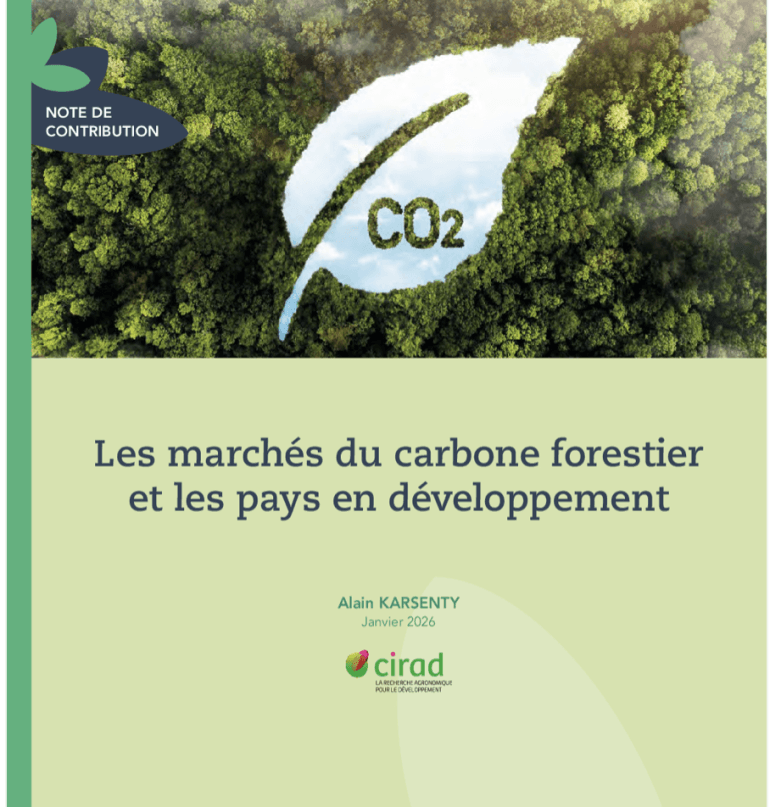
Since the Kyoto Protocol, carbon mechanisms have fueled hopes of generating significant financial flows to forest countries. From the Clean Development Mechanism (CDM) to REDD+ schemes, the aim was to reward the reduction of emissions from deforestation and forest degradation.
However, in recent years, numerous scientific publications—widely reported in the mainstream press—have questioned the climate effectiveness of a significant portion of the carbon credits offered on voluntary markets, particularly those related to “avoided deforestation.” These criticisms have led to a drop in transactions and a contraction in demand, weakening an already unstable model.
Beyond the issue of environmental credibility, several structural limitations have been highlighted:
These findings are particularly important for countries in the Congo Basin, where the sustainable forest concession model is one of the main bulwarks against forest conversion. This model is based on long-term planning, rigorous inventories, legal obligations and, increasingly, independent certification.
However, carbon mechanisms, which focus on emissions offsetting, capture only a fraction of the ecosystem services provided by these forests: biodiversity, water regulation, regional climate stability, formal jobs, social infrastructure, and contribution to national tax revenues.
Recent advances related to Article 6 of the Paris Agreement open up an international compliance framework aimed at avoiding double counting of emission reductions. This new regime could generate additional opportunities, without however resolving the challenges related to the permanence of carbon storage, leakage, or additionality.
In this context, the study also discusses alternative approaches: mechanisms not based exclusively on offsetting (such as the Brazilian TFFF initiative) or a shift towards a contribution-based approach, valuing a broader set of ecosystem services.
For ATIBT and its members, this analysis reinforces a long-held position: the preservation of tropical forests cannot rely on volatile and controversial carbon markets. It requires robust, predictable financial instruments that are compatible with the reality of sustainable forest management in concessions.
Read the full study:
ATIBT channel on YouTube
ATIBT channel on YouTube