
13.03.2026
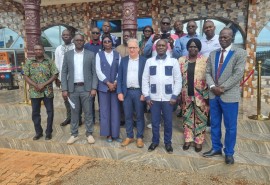
Six Congo Basin countries—Cameroon, Central African Republic, Democratic Republic of Congo, Equatorial Guinea, Gabon and the Republic of Congo—have launched new Strategic Roadmaps for Carbon Market and Climate Finance in the Forest Sector, with support from the World Bank.
According to reporting by Carbon Herald, the roadmaps are designed as country-specific blueprints that link national development priorities with carbon-market requirements—particularly around institutional coordination, equitable benefit-sharing, and robust Monitoring, Reporting and Verification (MRV) systems compatible with the Paris Agreement framework (including Article 6).
The World Bank frames the initiative as an attempt to shift the development narrative from forest-loss risk to “forest-led growth”, with an emphasis on readiness steps that can unlock results-based payments and longer-term climate investment. (World Bank)
The Carbon Herald piece notes that some countries (including Gabon and the Republic of Congo) have already advanced pilot results-based carbon agreements and REDD+ initiatives, while others (such as Equatorial Guinea and the Central African Republic) are at earlier stages—making capacity-building and institutional strengthening central to implementation.
For forest and timber operators, these roadmaps signal a push to professionalize and scale the enabling conditions that carbon finance demands:
For ATIBT members, this development fits into the broader need to track how evolving policy, finance, and market mechanisms intersect with sustainable forest management and legality frameworks—an approach ATIBT also promotes through its regular knowledge-sharing and sector monitoring.
The key test will be implementation: translating strategic roadmaps into operational reforms, credible pipelines of jurisdictional and project-level initiatives, and consistent MRV. In parallel, demand-side rules and buyer expectations will continue to shape which forest-carbon claims are financeable and reputationally robust.
Full article here: Carbon Herald (March 3, 2026), Theodora Stankova based on a World Bank announcement.