
26.06.2026
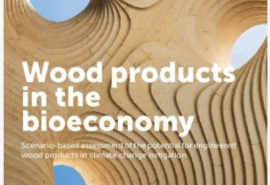
A new scientific study published by the World Business Council for Sustainable Development (WBCSD) provides robust evidence of wood’s contribution to climate change mitigation. By quantifying the significant greenhouse gas (GHG) savings generated when wood products replace more carbon-intensive materials and fossil-based alternatives, the report reinforces a message that ATIBT has been promoting for many years: sustainably managed forests and greater use of wood products are essential solutions for achieving global climate objectives.
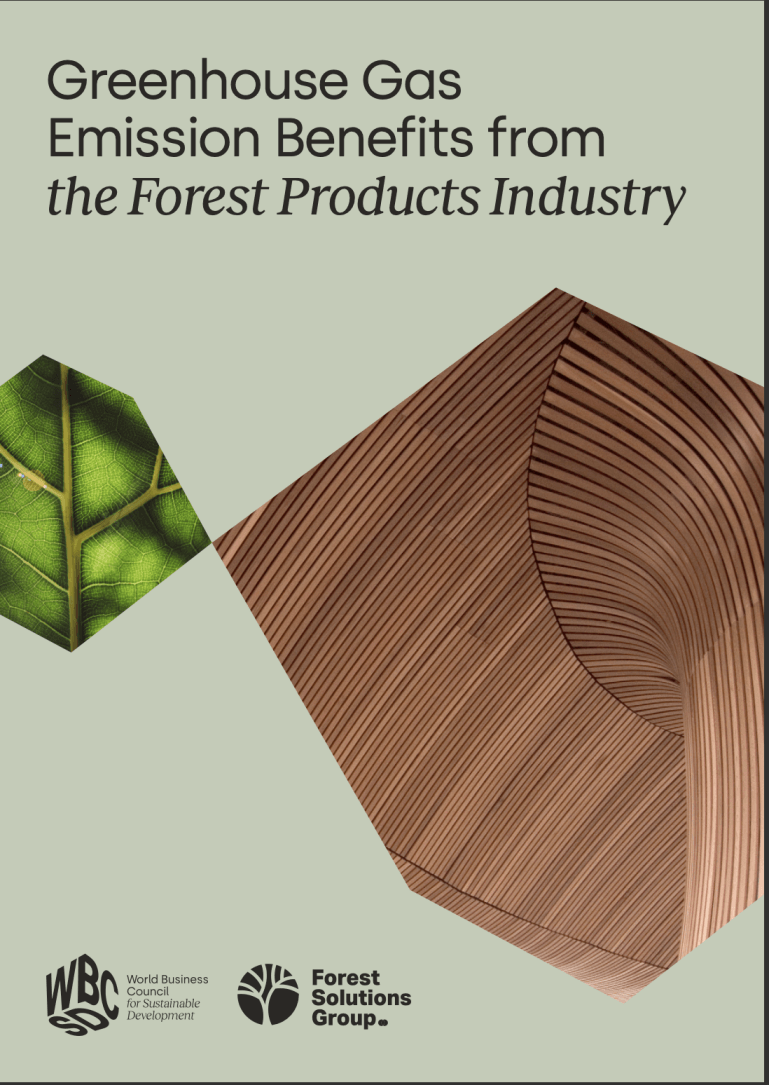
The Forest Solutions Group of the WBCSD has released the third phase of its Forest Sector Net-Zero Roadmap, focusing on a science-based assessment of the greenhouse gas emission savings achieved through the substitution of wood for more carbon-intensive materials.
Prepared by the National Council for Air and Stream Improvement (NCASI) using internationally recognized life-cycle assessment (LCA) methodologies and standards, including ISO standards and the GHG Protocol, the study provides an up-to-date scientific assessment based on the latest available data.
More than 2.27 gigatonnes of CO₂ emissions avoided every year
The report’s headline finding is striking: the global forest products sector delivers more than 2.27 gigatonnes of CO₂ equivalent emission benefits annually—roughly equivalent to the annual emissions of one billion homes.
The study identifies five major sources of climate benefits:
Among these, material substitution alone accounts for nearly 1.6 gigatonnes of avoided CO₂ emissions each year, confirming the crucial role that wood can play in decarbonizing the construction, packaging and manufacturing sectors.
Further evidence supporting certified tropical timber
For ATIBT, this publication provides further scientific confirmation of what the tropical timber sector has long advocated: wood products should be recognised not only as renewable materials but also as climate solutions.
When sourced from sustainably managed and independently certified forests, tropical timber offers a unique combination of benefits:
The report also highlights the importance of assessing these climate benefits through robust life-cycle assessment methodologies, comparing wood products with functionally equivalent alternatives. Such an evidence-based approach provides a sound basis for recognising the real contribution of forest products to climate neutrality goals.
Growing recognition of the forest sector’s contribution
At a time when climate policies increasingly promote bio-based materials, this study further strengthens the case for expanding the use of wood in construction, interior design, packaging and textiles.
For ATIBT, these findings reaffirm that ambitious climate strategies cannot succeed without sustainable tropical forest management. Promoting products from certified forests, recognising their climate benefits and encouraging their use in both public procurement and private markets are essential steps towards reconciling forest conservation, economic development and the transition to a low-carbon economy.