Central African Republic: A Step Toward Developing National Conservation Plans for CITES-Listed Timber Species
Central African Republic: A Step Toward Developing National Conservation Plans for CITES-Listed Timber Species
19.06.2026
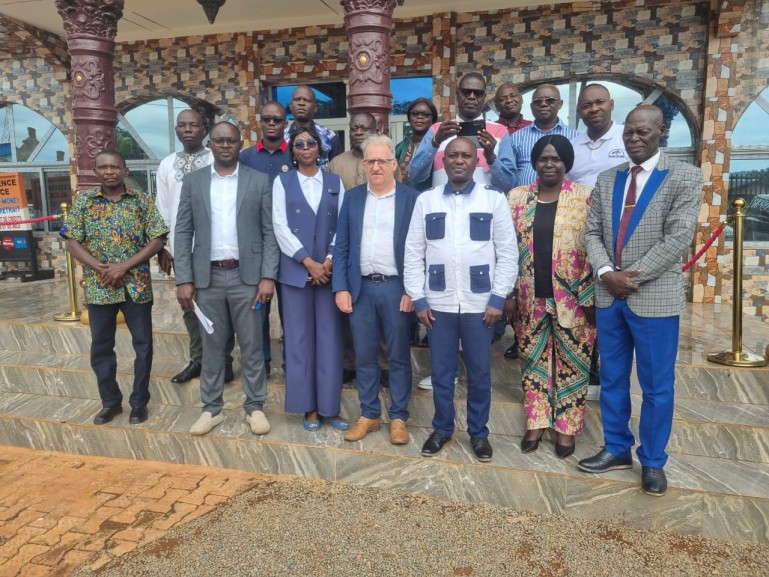
As part of its commitment to the effective implementation of CITES and the sustainable management of tropical forests, ATIBT organised a national workshop from 8 to 13 June 2026 in Ndéré (PK 26, Bangui–Boali road), dedicated to the development of Non-Detriment Findings (NDFs) for timber species listed in Appendix II of CITES in the Central African Republic.
The workshop brought together more than twenty participants representing the CITES Management Authority, Scientific Authorities, the forestry administration, the private forest sector, technical partners and the media. Its objective was to strengthen national capacities for the preparation of NDFs, which are now essential to demonstrate the sustainability of international trade in CITES-listed species.
One of the key lessons emerging from the workshop was the need to move beyond an approach based solely on the establishment of annual export quotas and to adopt a genuine NDF process grounded in scientific data, biological parameters, forest inventory results, forest management regulations, harvesting levels, standing stocks and trade flows.
The discussions built upon the regional guidance developed during the Douala workshop held in March 2025, as well as CITES NDF Guidance Module 10 for tree species.
Particular attention was given to African Padauk (Pterocarpus soyauxii), a species of major economic importance for the Central African Republic and recently included in CITES Appendix II.
During the workshop, a substantial body of documentation was compiled and organised, including:
Technical documentation from 14 Forest Management and Harvesting Permits (PEAs) covering 12 forest management plans;
Forest inventory and population structure data;
Annual Operational Plans (AOPs);
Information relating to quotas, harvesting activities and timber stocks;
Management documents from 11 community forests.
These data were used to establish national databases and to carry out harmonised calculations of forest stock recovery rates across the country’s forest concessions.
Participants agreed on a common methodology based on the application of a maximum harvesting rate to the initial inventoried resource above the Minimum Management Diameter (MMD), while clearly distinguishing between inventoried, authorised, harvested, stocked and exported volumes.
The workshop also enabled the preparation of a first draft NDF for Pterocarpus soyauxii. The document already includes key elements relating to the institutional framework, forest management system, stock recovery parameters, population structures and quota-setting methodology.
Although several datasets still require consolidation before official validation, this first draft represents a major milestone towards the development of the Central African Republic’s first national reference NDF for CITES-listed timber species.
Beyond the immediate technical outputs, the workshop provided an opportunity to define a national roadmap for finalising NDFs and preparing the 2027 export quotas. Recommendations focused in particular on strengthening biological and trade data, improving species identification capacities, enhancing traceability systems and clarifying institutional responsibilities.
This process will help ensure that future exports of CITES-listed timber species are supported by robust scientific evidence and meet the expectations of international markets.
This activity was carried out with support from ATIBT as part of the Tropical Timber Trade (TTT) project. TTT is a project funded by the German Federal Ministry for Economic Cooperation and Development (BMZ) and supported by the Deutsche Gesellschaft für Internationale Zusammenarbeit (GIZ) GmbH.
The project aims to strengthen the sustainable management of tropical forests and improve the compliance of tropical timber supply chains with international requirements, particularly those of CITES.
Through this support, ATIBT reaffirms its commitment to working alongside Central African producer countries to develop robust scientific tools, strengthen national capacities, and promote legal, sustainable, and responsible trade in forest resources.