
03.07.2026
Since 29 June 2026, the European Union has extended Annex D of its Regulation implementing CITES to all species of the genera Entandrophragma, Shorea and Anthoshorea. This development concerns several commercially important tropical timber species and introduces new import requirements within the European Union.
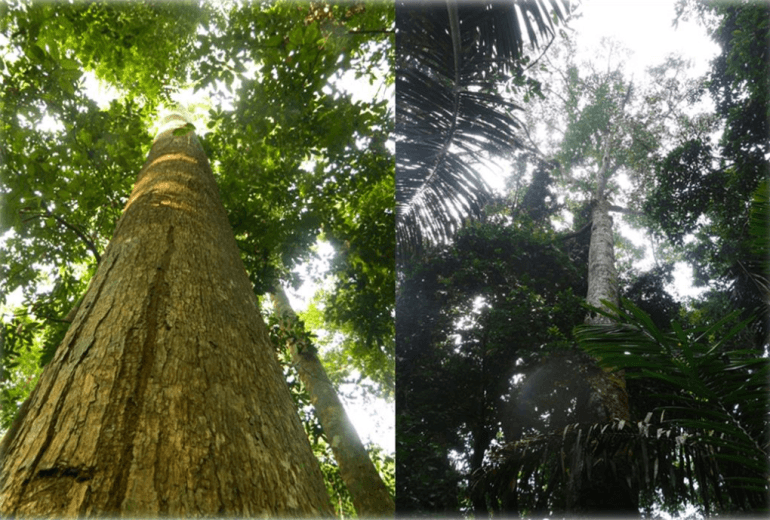
An extension covering African and Asian timber species
This regulatory amendment applies to several commercially important tropical timber species from both Africa and Asia.
In Central Africa, it extends the scope of Annex D to the entire genus Entandrophragma. Sapelli (Entandrophragma cylindricum) had already been included in Annex D since 2022; the new measure therefore extends the listing to the other species of the genus, including sipo (E. utile), kosipo (E. candollei), tiama (E. angolense), and the remaining Entandrophragma species.
In Asia, the amendment also covers species commonly traded under well-known commercial names such as meranti, lauan, seraya, balau, bangkirai, and selangan batu.
The amendment is therefore relevant not only to African producers, but also to European importers, traders and processors working with tropical timber from a wide range of origins.
An Annex specific to the European Union
It is important to recall that Annex D is not an Appendix to the CITES Convention. Rather, it is a specific annex to the European Union Regulation implementing CITES, applicable only within the European Union.
Unlike CITES Appendices I, II and III (which broadly correspond to Annexes A, B and C of the EU Regulation), Annex D is an EU-specific mechanism designed to monitor imports of species that are not necessarily listed under the CITES Convention.
This distinction is essential: inclusion in Annex D does not mean that a species is listed under CITES and does not trigger the international CITES permitting system.
What are the implications for operators?
Listing in Annex D does not prohibit trade in these timber species and does not require CITES export permits to be issued by the countries of origin.
However, the products concerned are now subject to the requirements laid down in the EU Regulation. For the newly listed species, Annotation #5 applies and covers, among others: logs; sawn wood; veneer sheets; plywood; transformed wood products.
Imports of these products into the European Union must now be accompanied by an import notification, which must be presented to the customs authorities upon entry into the European Union.
This procedure enables the European authorities to record import volumes, their origin and commercial source, thereby strengthening the monitoring of import flows.
Practical guidance published by the Belgian CITES Management Authority
To facilitate the implementation of the new requirements, the Belgian CITES Management Authority has published several guidance documents for economic operators and competent authorities.
These include:
These documents provide practical guidance for companies affected by the new provisions.
A tool for monitoring trade
Annex D is primarily a trade monitoring instrument. The information collected through import notifications enables the European Union to monitor trade flows for selected species and, where appropriate, assess whether additional measures may be required.
This approach is not new. The European Union previously followed a similar path for the genus Khaya, first including the species in Annex D before subsequently supporting their inclusion in CITES Appendix II.
Without prejudging any future developments, this extension reflects the growing interest of the European authorities in monitoring international trade in several economically important tropical timber species.
ATIBT will continue to closely monitor this issue and keep its members informed of any regulatory and technical developments affecting the tropical timber sector.