
27.02.2026
With the expansion of commercial species listings in CITES Appendix II, national implementation of the Convention has intensified considerably in Central Africa. The development of Non-Detriment Findings (NDFs), the strengthening of licensing procedures, traceability requirements, and export controls require structural adjustments by both government agencies and private operators.
It is in this context that the project "The industrial wood sector in Central Africa: economic and social impacts of international timber trade regulation for species listed in Appendix II of CITES" is being implemented in Cameroon and Gabon as part of the RESSAC program (Research in Ecology and Social Sciences for the Sustainable Management of Forest Ecosystems in Central Africa), coordinated by CIFOR-ICRAF and funded by the European Union. The consortium brings together the University of Liège – Gembloux Agro-Bio Tech (lead partner), the University of Dschang, Rougier Gabon, and ATIBT and includes a postdoctoral researcher, three Master's students, and a technical assistant, who are mobilized to conduct field surveys and data analysis.
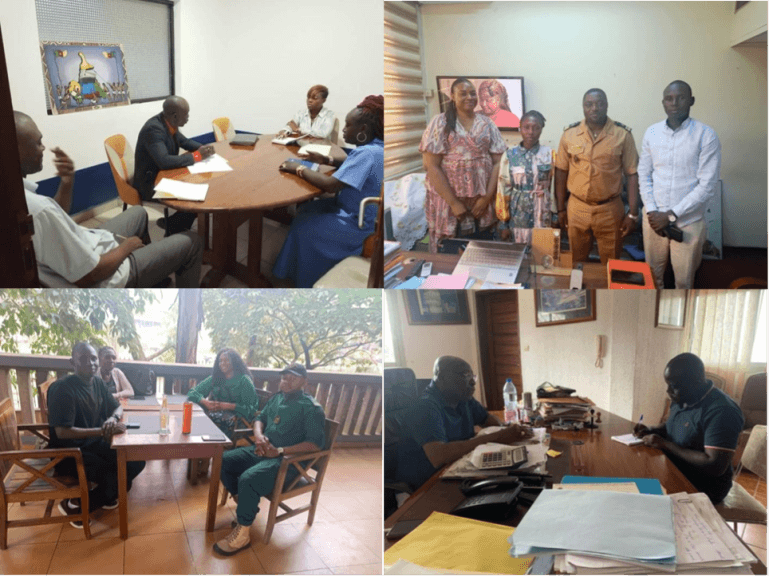
The methodology is based on a mixed approach combining semi-structured interviews, document analysis, and quantitative data collection from three categories of stakeholders: forestry administrations, timber companies, and local communities. The missions have been deployed for more than four months in the Central, Littoral, and Eastern regions of Cameroon, meeting with central and decentralized administrations, customs services, export companies, and communities living near forest areas.
Initial findings indicate that the implementation of CITES in Cameroon has led to significant institutional adjustments, including the reorganization and designation of focal points, the formalization of permit issuance procedures, and the deployment of the SIGIF 2 national traceability system. For forestry companies, initial data show an increase in CITES compliance costs and longer export times for species listed in Appendix II. These delays, particularly in the issuance of permits, especially for imports to the European market, are a major source of tension for operators. Finally, surveys of local communities highlight mainly indirect effects related to changes in harvested volumes, employment dynamics, and access to resources, while their involvement in formal CITES implementation mechanisms remains limited, raising issues of inclusion in forest governance.
The consolidated results expected in the second half of 2026 will provide in-depth documentation of the economic, institutional, and social impacts of CITES regulation on the industrial timber sector in the region and will feed into the technical and political dialogue on improving its implementation.