
27.02.2026
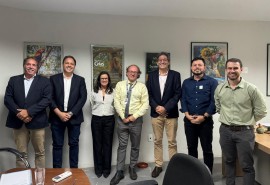
Part of the ATIBT team traveled to London for a visit to TDUK (Timber Development UK) on February 17 and 18, and a working session with the association's managers.

This visit provided an opportunity to discuss a number of topics related to the existing links between professional associations:
Exploring opportunities to strengthen the commitment of the private sector and professional associations of producers and importers to increase trade in legal and sustainable tropical timber, reduce illegal timber trade by improving forest governance and transparency, and harmonize market requirements (EUDR/UKTR) with the national frameworks of producer countries.
Consider international recognition of the Broader Market Recognition Coalition (BMRC). As a reminder, the BMRC represents various tropical countries working together to promote their national sustainable forest management systems globally. By increasing demand for their sustainably sourced timber products, the aim is to encourage sustainable forest management. The founding members of the BMRC are Cameroon, Ghana, Guyana, Indonesia, Liberia, and the Republic of Congo. As other countries join the coalition, its influence on the market will grow, further encouraging sustainable forest management.
Various key activities could be prepared jointly with TDUK, in particular (1) producer-buyer exchange workshops including field visits to promote direct dialogue, (2) technical capacity building for SMEs in certain countries, including training on legality, traceability, and tax compliance, (3) drafting a guide for importers and creating e-learning modules on due diligence, and finally, (4) communication campaigns at events such as Carrefour du Bois.
With specific regard to the market, discussions provided an opportunity to take stock of the issues at stake, highlighting the following points:
Updating standard contracts: TDUK is currently working on revising its standard contracts (such as the Nordic “Noroft” contract). The standard contract for hardwoods has not been updated since 2012. Collaboration is being considered to create new common rules for the tropical timber trade, potentially based on the ATIBT's technical data sheets and “contracts and uses” documents (which specify grading rules, prevent disputes, etc.).
Plans were made to continue ATIBT's support for the tropical timber market in the United Kingdom, following the meeting held on September 25, 2024 with the London Hardwood Club, during which the prospects for tropical timber on the British market were discussed.