
12.11.2026
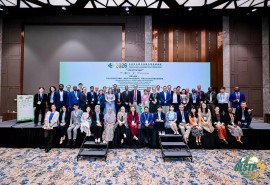
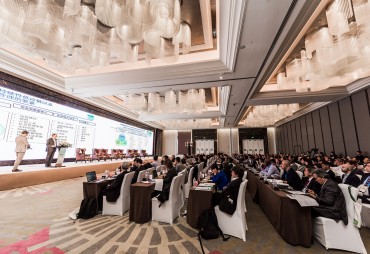
Held in Antwerp on 5 and 6 November 2026, the 11th International Hardwood Conference brought together around 170 participants, a record attendance. Against a backdrop of uncertain demand and raw material supply challenges, discussions highlighted the importance of local processing, sustainable management and innovation. Tropical timber featured in a dedicated session, with presentations on Ghana, the Congo Basin and Guyana.

Hosted by Fedustria and jointly organised with the European Timber Trade Federation (ETTF) and the European Organisation of the Sawmill Industry (EOS), this edition combined a visit to the port of Antwerp on 5 November with a full conference programme on 6 November.
Presentations outlined a sector facing structural changes. In both Europe and the United States, hardwood lumber production has been declining over the long term. Sluggish construction activity and weaker Chinese demand are affecting markets, while exports of unprocessed logs continue to raise questions about how much value is retained in producing regions.
Tropical timber: traceability, certification and local processing
The session dedicated to tropical timber highlighted developments in several countries and regions.
Dr Richard Gyimah of Ghana’s Forestry Commission presented the country’s FLEGT licensing system and the mechanisms established to ensure timber legality. His presentation emphasised the fundamental role of a reliable chain of custody in sustainable forest management.
Eli Prins of Probos then reviewed developments in the Congo Basin timber sector. While pressures on forests persist, particularly from agricultural conversion and the use of wood as fuel, certified sustainable forest management is gaining ground. Despite declining sawn timber exports to Europe compared with their peak around twenty years ago, the European market remains an important destination for the region’s products.
Rafeek Khan’s presentation on Guyana highlighted the expansion of its sawmilling industry and the growing emphasis on domestic processing and added value.
For ATIBT, these discussions reflect key priorities: supporting sustainable tropical forest management, strengthening traceability and developing markets that reward products from responsible supply chains. They also underline the importance of strengthening links between producing countries and consumer markets.
Innovation and better use of wood’s properties
The conference also explored opportunities offered by artificial intelligence for automated log and sawn timber grading, alongside the development of new hardwood applications.
Presentations on flooring and furniture confirmed a challenging trading environment, while noting continued demand for natural materials and surfaces. Wood’s benefits for human well-being, developments in construction and thermal modification processes also informed discussions on increasing the value and uses of wood.
The next International Hardwood Conference will take place in Rome in 2028.
For more information, visit the IHC 2026 website.