
27.11.2026
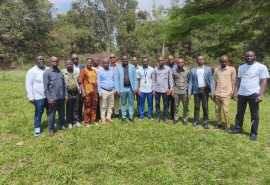
From September to November 2026, the Tropical Timber Trade Facility (TTT) project stepped up its training activities in Cameroon, Congo, Gabon, Equatorial Guinea, the Central African Republic and the Democratic Republic of Congo. More than 130 people from forestry companies, public administrations, communities and training centres strengthened their skills in legality, sustainable forest management, timber identification, social issues and wood gluing.
Capacity building is one of the priorities of the TTT project, within which ATIBT is in charge of a training component. The common thread: giving stakeholders in the sector the means to demonstrate the legality and sustainability of their timber.
Legality: preparing for pre-audits
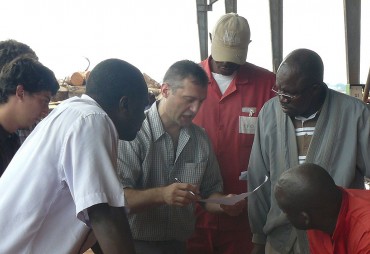
In Cameroon, Congo, Gabon and CAR, the companies taking part in the “Towards legality verification” programme attended a second three-day module in September. Led by Alain Tiotsop and Germain Yéné, these sessions reviewed the self-assessments carried out within the companies, improved their corrective action plans and prepared participants for how an audit actually unfolds. In Libreville, participants discussed with Pierre Luo, Secretary General of UFIAG, why management commitment is essential to the process. The programme materials have also been translated into Chinese.
Social pillars very often account for a large share of the non-conformities found during first legality audits. In CAR, a further four-day course led by Mr Nkoumbele thus brought together 12 participants from three companies in Bangui at the end of November. It covered internal social requirements (labour law, living conditions, health and safety) and external ones (relations with communities, user rights, free, prior and informed consent).
DRC: social clauses in specifications
The Fédération des Industriels du Bois (FIB) designed and delivered a five-day module on the implementation and monitoring of the social clauses of forest concession specifications (cahiers des charges): legal framework, local governance, management of the Local Development Fund, monitoring of commitments and accountability to communities. It was piloted in Kisangani and then in Mbandaka with some fifty participants: administrations, concession holders, local management committees, local authorities and NGOs. In Kisangani, the average score in the knowledge test rose from 7.5/20 before the training to 16/20 after. In Mbandaka, participants benefited from training materials revised after the first session and translated into Chinese.
Congo: recognising sawn timber
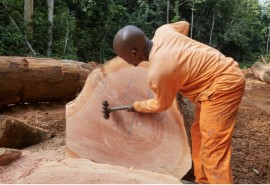
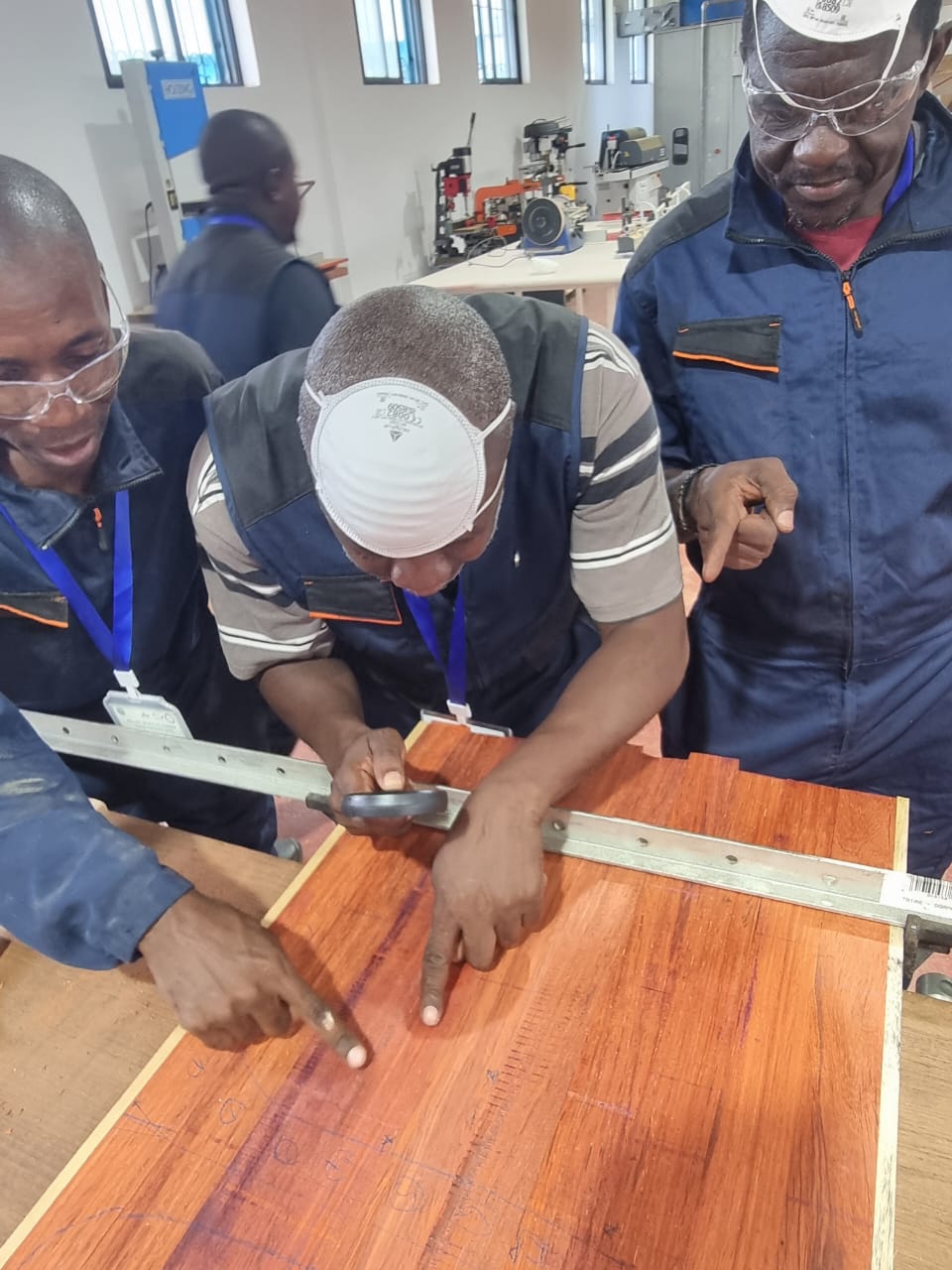
With the growth of local processing, control officers now have to identify species in the form of sawn timber, not just logs. Yet declaring one species in place of another remains a common form of fraud. In Pointe-Noire and Brazzaville, Water and Forestry and Customs officers learned to recognise some forty species with a hand lens, including protected species and those listed under CITES. The sessions were led by two trainers from the École Nationale des Eaux et Forêts du Cap Estérias (ENEF, Gabon), Ms Minkue M’Eny and Mr Endome, and a Congolese trainer, Mr Achille Tsieta.
Equatorial Guinea and Gabon: training the trainers
In Equatorial Guinea, 15 technicians from INDEFOR-AP, forestry companies and INCOMA attended a training course in Kogo on the fundamentals of sustainable forest management, designed with and for INDEFOR-AP and led by Mr Juan Carlos Hernández Fernández. It covered forest inventories, management plans, traceability and EUDR requirements, with a full day of fieldwork in the forest.
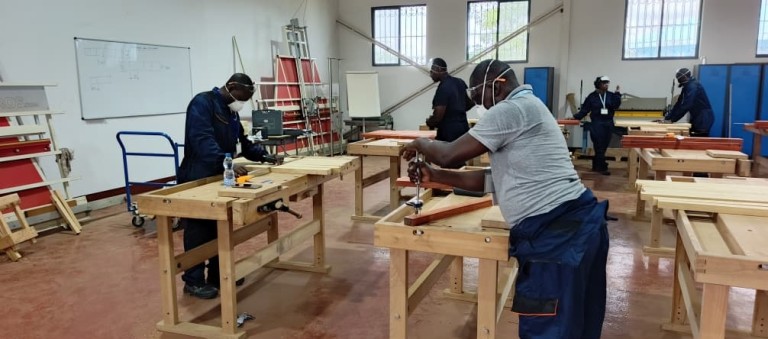
In Gabon, CFEP Bois-BTP in Nkok hosted 13 participants at the end of November, including three trainers from the Instituto Politécnico Modesto Gené Roig and the Centro Profesional 12 de Octubre in Bata (Equatorial Guinea), for a course on wood gluing in joinery. Wood moisture, choosing adhesives suited to tropical conditions, surface preparation, clamping: these fundamentals pave the way for higher value-added glued wood products. All three training centres have been equipped with precision moisture meters, and the Equatoguinean trainers will in turn be able to pass on these skills in their own centres.
Skills that outlast the project
As the TTT project closes on 30 November 2026, these courses leave behind training materials in French, Spanish and Chinese, and local trainers ready to bring them to life.
The Tropical Timber Trade Facility (TTT) project is funded by the German Federal Ministry for Economic Cooperation and Development (BMZ) and implemented by the Deutsche Gesellschaft für Internationale Zusammenarbeit (GIZ) GmbH
ATIBT channel on YouTube
ATIBT channel on YouTube