
18.09.2026
ATIBT has published a new assessment of the domestic timber value chain in the Republic of the Congo. Conducted as part of the Project to Support the Sustainable Development of the National Timber Sector (MIB Congo), this study provides an in-depth analysis of the domestic timber market and identifies several strategies to strengthen its structure, formalization, and contribution to the national economy.
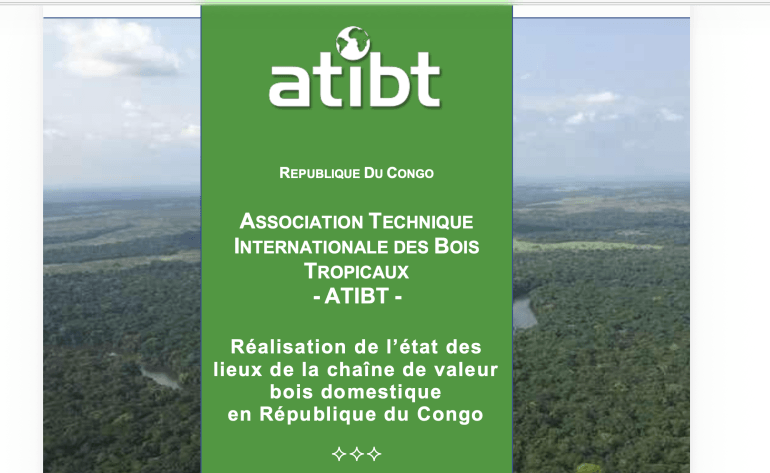
Conducted by the FRM Ingénierie–BCAF-Congo consortium, the study analyzes the entire value chain, from access to forest resources and primary processing through to marketing, woodworking, and final consumption. It also examines regulations and access to legally harvested timber, economic and commercial factors, vocational training, and social inclusion.
The analysis is based on extensive fieldwork. In total, 895 people were interviewed, including carpenters and cabinetmakers, timber sellers, small-scale sawmill operators, women, and representatives of indigenous communities. The surveys were conducted in Brazzaville, Pointe-Noire, Dolisie, Sibiti, and Ouesso, and supplemented by monitoring of lumber flows at the main entry points to these cities.
A Significant Domestic Market, but Still Largely Informal
One of the study’s key findings concerns the economic significance of the domestic timber market. Urban consumption of sawn timber is estimated at approximately 150,000 m³ per year, corresponding to nearly 390,000 m³ of logs harvested from the forest. Annual revenue for the urban segment is estimated at between 25.6 and 32 billion CFA francs.
However, the supply chain remains largely informal: approximately 66% of the sawn timber consumed comes from small-scale, predominantly informal production, compared to 34% from formal industrial processing. In 2025, the special permits and licenses in effect covered less than 2% of the estimated small-scale production volumes.
At the same time, the study highlights the significant potential for adding value to the Congolese forest resource. More than 50 tree species are utilized by the domestic market, including 21 lesser-known species (LKTS). Improving material yields, diversifying the species used, better aligning the dimensions of sawn lumber with actual market needs, and adding value to byproducts are thus key avenues for strengthening the sector’s competitiveness.
Avenues for Structuring and Professionalizing the Sector
Based on this assessment, the report identifies several priorities: securing and formalizing the domestic market supply, strengthening the role of legal timber, better coordinating industrial production, SMEs, and artisanal processing, improving technical skills, further valorizing available tree species, and supporting the diversification of the national industry.
These findings should help guide the next steps of the MIB Congo project and, more broadly, contribute to a domestictimber sector that is better structured, more professional, and capable of generating greater added value in the Republic of the Congo.
The full report, “Assessment of the Domestic Timber Value Chain in the Republic of the Congo,” is available for download below.