
03.04.2026
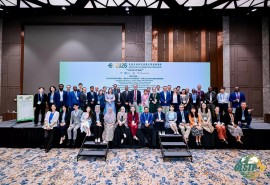
From March 15 to 21, 2026, PEFC/PAFC, represented by Lucas Millet, Coordinator for the Congo Basin, accompanied by ATIBT, represented by its President Françoise Van de Ven, led a mission to Kinshasa, in the Democratic Republic of the Congo (DRC), to assess the conditions for establishing a national forest certification scheme.
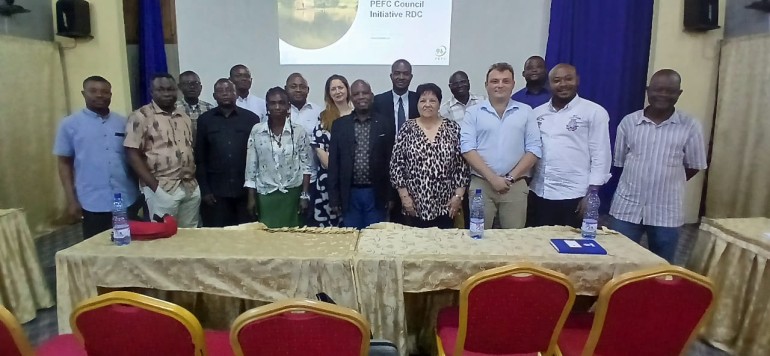
This mission brought together a wide range of stakeholders—public authorities, the private sector, civil society, and technical and financial partners—confirming a growing interest in structural tools to support sustainable forest management.
A constructive dialogue with national authorities
One of the highlights of the mission was the in-depth discussions with the authorities responsible for the forestry and environmental sectors.
The meetings were facilitated by the support of FIB President Gabriel Mola and Secretary General Eric Gitabi.
A meeting was thus arranged with the Minister of the Environment, Sustainable Development, and the New Climate Economy, Ms. Marie Nyange Ndambo, as well as with Ms. Pascaline Mbangu Kikumbi, Secretary General of the Ministry.
The discussions highlighted a clear commitment by public authorities to strengthen forest governance, within a reform context marked notably by: The authorities expressed particular interest in developing a national certification standard, seen as a concrete lever for improving forestry practices, structuring the sector, and enhancing the credibility of Congolese timber on international markets.
Furthermore, the possibility of strengthening ATIBT’s presence in the country was raised, in order to more closely support ongoing reforms and national stakeholders in their efforts to structure the sector.
Strong engagement from government agencies and technical institutions
Beyond the ministerial level, several national technical institutions have also expressed their support for the initiative.
Discussions particularly highlighted the role that certification could play in: These institutions expressed interest in receiving additional technical information to support the development process of the PAFC DRC standard.
Broad support from national stakeholders
The mission confirmed growing support for the initiative, both from civil society and the private sector.
A workshop dedicated to civil society mobilized numerous organizations, which formalized their support for the development of a national standard and expressed their willingness to actively participate in technical work and public consultations.
On the private sector side, despite a particularly challenging economic context, the companies met recognized the strategic value of certification for:A changing sectoral context, between challenges and opportunities
The discussions also provided a clear overview of the forestry sector in the DRC.
Several major challenges were identified:At the same time, new opportunities are emerging, notably:In this context, certification appears to be a key tool for supporting these transformations and providing a credible and recognized framework.
Toward a Roadmap for the PAFC DRC
All consultations conducted during the mission point to a shared conclusion: the conditions are in place to initiate the process of developing a PAFC standard in the DRC.
The next steps identified include: ATIBT, in collaboration with its partners, will continue its commitment to supporting this initiative, ensuring an inclusive approach that is adapted to local realities and aligned with international standards.