
05.12.2025
The Tropical Timber Trade Facility (TTT) project is a German government project that aims to combat illegal deforestation. ATIBT supports this project by promoting legal and sustainable timber trade and establishing partnerships between the Congo Basin, China, and Europe. As part of the TTT project, ATIBT plays a key role in promoting dialogue between federations, improving traceability systems, and promoting sustainable tropical timber on global markets.
It is in this context that two new people are joining the ATIBT team.
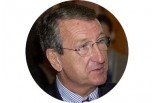
Alessandra Negri joins ATIBT to strategically structure and strengthen the Timber Trade Portal as part of the TTT project
ATIBT is strengthening its team by welcoming Alessandra, whose mission is central to the strategic development of the Timber Trade Portal (TTP).
A graduate in political science and AgroParisTech, Alessandra has solid experience in environmental and public policy issues. She has worked on timber market analysis and CSR as part of her activities for Le Commerce du Bois (LCB). Thanks to her analytical skills and experience in environmental policy, Alessandra works to make information more reliable, clearer, and more accessible, helping companies better understand the regulatory and operational issues that influence the international timber trade.
The TTP is now an essential tool for companies—especially SMEs—engaged in due diligence processes. The platform aims to provide clear, independent, and structured access to country-specific information: legality requirements, forestry regulations, supply risks, customs requirements, certifications, taxation, and now, new guidelines related to the EU DUE and recent CITES decisions.
Alessandra's mission will be to:
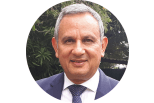
Philippe Nkenne Tikeng joins ATIBT as Junior Project Manager to support the technical work of the TTT
A recent graduate in bioengineering in forest and natural area management (Gembloux Agro-Bio Tech – ULg) and also holder of a professional master's degree in wood harvesting and processing (University of Dschang), Philippe joins ATIBT as Junior Project Manager, based in Gembloux.
He has already collaborated with ATIBT on the Vulnerability project, where he worked on the conservation status of the main commercial species in Central Africa with a view to assessing them according to the criteria of the IUCN Red List. He also helped Central African countries to draft their Non- Detriment findings (NDF).
As part of the TTT, Philippe will use his scientific and analytical skills to strengthen the production of technical information useful to the sector. His missions are structured around several areas: