
09.10.2026
Over the past five years, Chinese imports of timber from Central Africa have fallen by around 40%. To understand why, ATIBT compared two perspectives on the same supply chain: those of African producers and Chinese buyers. Their assessment of the market is the same. Their explanations differ—and that difference reveals where action could make a difference.
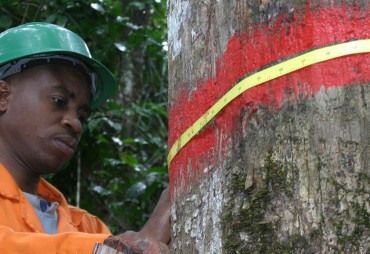
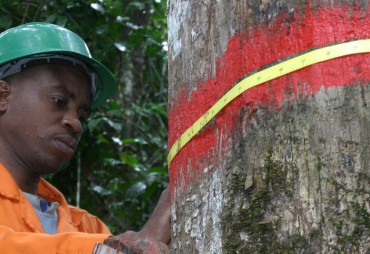
On the African side, an internal study gathered views from ten forest concession operators, commercial agents and brokers. On the Chinese side, Preferred by Nature interviewed twelve importers and six end buyers for ATIBT. Two studies, two ends of the supply chain, and one simple question: do both sides see the same market?
A shared assessment across the supply chain
African and Chinese stakeholders agree on the state of the market. Demand is declining, and the downturn is lasting. All twelve importers interviewed confirm this; as one puts it, “no species is selling well”. The main factors are China’s property crisis, with new construction starts down 74% since 2020, and the growing use of plantation timber.
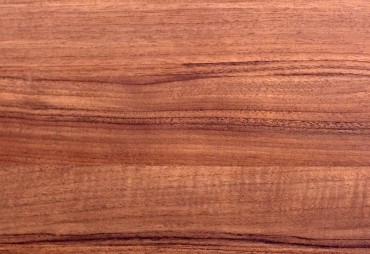
Preferences are changing too. Consumers aged 25–40 are turning away from the red and dark woods that built the reputation of African timber species, favouring lighter colours inspired by Scandinavian design. For sapelli and padouk, “the aesthetic appeal has disappeared”, according to one importer.
Finally, certification does not drive sales in China. Certified timber costs 15–30% more, yet domestic customers do not request it. It matters only when finished products are re-exported to Europe or North America.
Too expensive—or not reliable enough?
The explanations are where the perspectives diverge. From the African viewpoint, price is the main problem: the Chinese market is seen as primarily seeking to reduce costs. From the Chinese viewpoint, the problem lies elsewhere. Buyers point to inconsistent batches, unclear grading, cracks caused by insufficient drying, uncertain delivery times and prices renegotiated during contracts. One manufacturer puts it simply: timber needs to be “clearly graded—A, B or C—with one grade shipped per container”.
The figures help distinguish between these two interpretations. Sapelli currently sells for around RMB 5,000/m³, while American white oak has risen from RMB 5,000 to RMB 8,000–9,000/m³. African timber is therefore not too expensive. However, when buyers cannot assess its quality in advance, they discount the price to protect themselves against risk. Economists call this information asymmetry; the synthesis describes it as a reliability discount.
There is a similar divergence over intermediaries. The Chinese study recommends bypassing them to deal directly with suppliers. On the African side, stakeholders emphasise that agents and brokers provide networks, information and trust. In a market where “eventually, everyone knows everyone”, cutting them out would undermine the relationships on which trade depends.
The hidden value of certification
Comparing the two studies reveals the most unexpected finding. Among their main difficulties, Chinese importers cite suppliers who “do not have their own concession and buy logs locally”. Yet certified companies are precisely the integrated concession operators that control their timber resource and whose traceability systems are audited.
In other words, certification does have value in China. Its value lies in reliability rather than environmental credentials: consistent volumes, verified origin and correctly identified species. This value remains invisible because certification is currently presented as an assurance of sustainability rather than commercial reliability.
What next? Sell better, rather than more
If the problem is perceived reliability, the response is to make quality clear rather than lower prices.
For producers, this requires practical action: sorting timber by grade, using a consistent species name alongside its scientific name, drying sawn timber before shipment, and honouring agreed delivery times and prices. Processed products such as flooring, decking and joinery now benefit from zero import duties when entering China, which could provide a possibility for diversification in the region.
For ATIBT, the challenge is collective: develop a common framework for grading and species naming, establish a regular information channel with its Chinese counterpart, CTWPDA, and jointly promote lighter-coloured species. A new species will inspire confidence among buyers only if several suppliers can provide it.
For the Fair&Precious collective, the task is to change the message rather than the practices: move from “certified means sustainable” to “certified means reliable and authentic”, prioritising Chinese manufacturers that re-export to Europe and the United States.
China’s market is unlikely to return to its previous volumes. But for African timber, the competition is no longer about quantity: it is about trust.
Further reading
Would you like to explore the findings in more detail? The full Preferred by Nature report, Study on China’s Domestic Tropical Timber Market, is available. It presents profiles of the Chinese importers interviewed, the species they purchase, their selection criteria and the difficulties they encounter, alongside an analysis of trade flows between COMIFAC countries and China from 2021 to 2025.