
25.09.2026
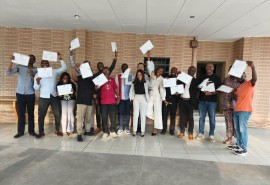
From September 6 to 12, 2026, an Ivorian delegation, comprising representatives from the government, the private sector, civil society, and technical partners, including ATIBT—traveled to Ghana to learn from an experience unique in Africa
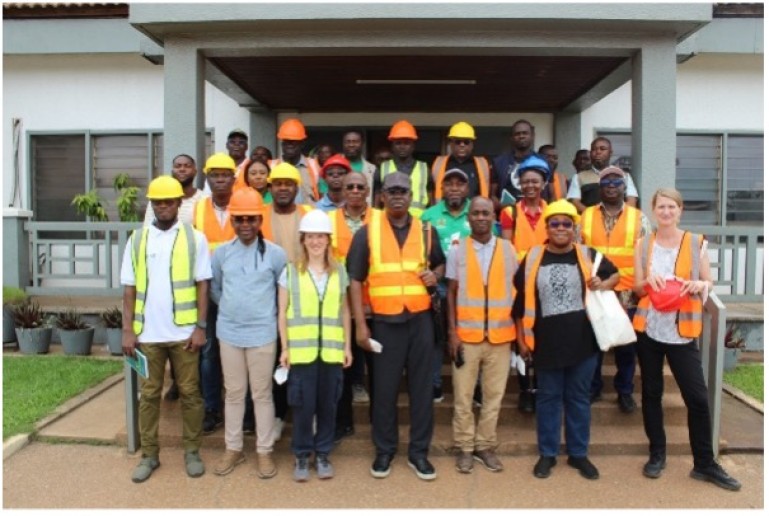
Organized with support from the GIZ’s Forests4Future project and the European Union’s PASSAD-Forêt project, this experience-sharing mission comes at a pivotal moment for Côte d’Ivoire. Following the signing of the FLEGT VPA between Côte d’Ivoire and the European Union on February 19, 2024, the two parties adopted an implementation schedule for the period 2025–2029, with the goal of establishing a credible and operational National Legality Verification System (SNVL) by the end of 2028.
Ghana, for its part, reached this milestone on August 15, 2025, becoming the first African country—and the second in the world after Indonesia—to issue FLEGT licenses. One year later, the results are tangible: 873 permits issued, more than 40,000 m³ of timber exported to nineteen European Union countries, with a value of nearly 25.6 million euros.
The mission’s main contribution lies not so much in these results as in the candor with which the Ghanaian authorities described their challenges. Five key lessons now shape the Ivorian roadmap:
Law before technology. In Ghana, the legal definition of legality preceded the design of the IT system. Ghanaian technicians recommended replicating this sequence, supported by a comprehensive mapping of business processes.
Verify data rather than simply record it. Much more than a simple registry, the core of the Ghanaian system relies on the automatic reconciliation of data volumes at every stage of the chain, with a block in place in case of anomalies.
Interoperability takes precedence over replacement. The Ghanaian experience shows that it is not necessary to overhaul existing systems to build an effective system. Twenty-six databases were interconnected, prioritizing their interoperability over their replacement. For businesses, providing a portal for accessing official data proved sufficient, without the need to systematically interconnect their private information systems with those of the government.
Sustainability is determined at the design stage. The development of the Ghanaian system cost several million dollars, while partners rarely finance recurring costs. The system’s long-term viability must therefore be considered an integral part of its architecture, rather than an issue to be addressed only after the system is operational.
Change management and institutional continuity are just as important as the technical aspects.
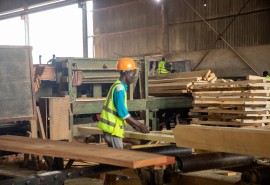
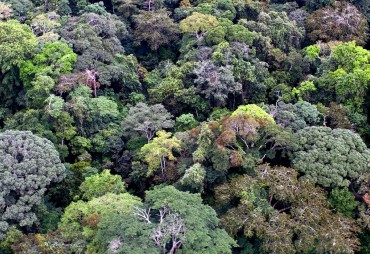
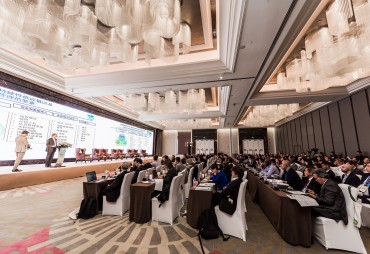
The Ghanaian process has spanned seven ministers and numerous changes in government. Training must be viewed as an ongoing component rather than an end-of-project activity, in order to embed the system within institutions rather than make it dependent on individuals or political cycles. In addition to the presentations and discussions held in Accra, the delegation conducted several field visits, allowing them to compare theoretical concepts with operational realities. In particular, they visited the industrial sites of two forestry companies, MIRO Forestry and Logs & Lumber Limited; Sokoban Wood Village, a formalized local timber market; and the Bobiri Forest Reserve.
At the conclusion of the mission, the two countries agreed to establish a permanent technical working group between their forestry administrations to ensure the long-term sustainability of this exchange of expertise. A new phase is now beginning for Côte d’Ivoire: transforming these lessons into operational actions to complete the SNVLT by the end of 2028.
ATIBT channel on YouTube
ATIBT channel on YouTube