
16.10.2026
A new study, published in the scientific journal Plants, People, Planet, highlights the value of an integrated, “forest-to-market” approach to identifying less-known tree species that could contribute to the sustainable diversification of the tropical timber
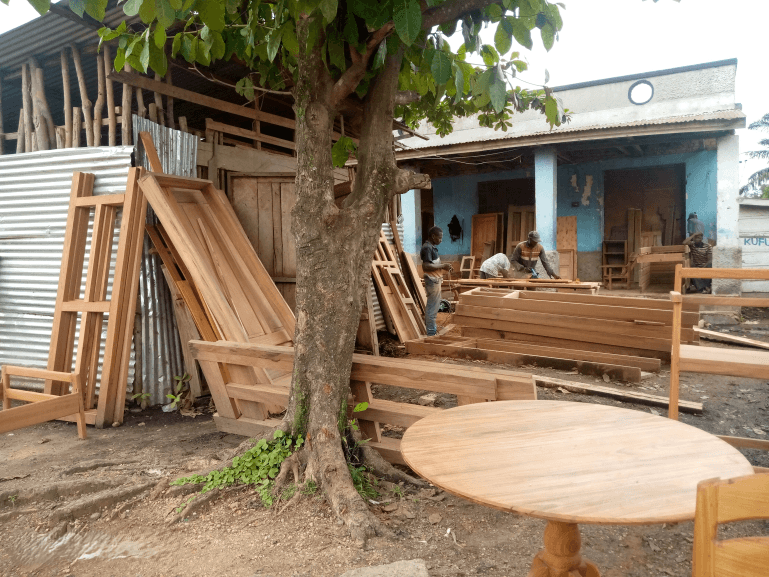
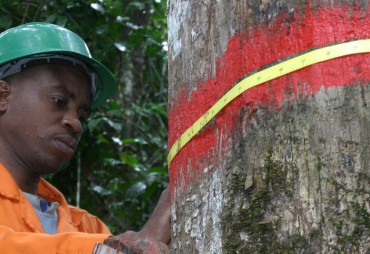
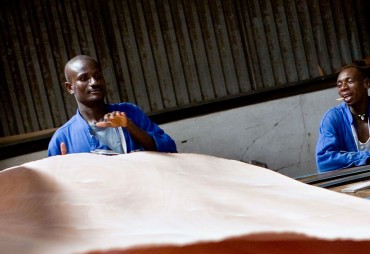
Led by Mbusa Wasukundi, a researcher at Gembloux Agro-Bio Tech (University of Liège), and his team, this research focuses on the domestic timber market in Kisangani, in the Democratic Republic of the Congo (DRC). It is based on surveys conducted at 21 sawmills and 38 carpentry workshops, supplemented by an analysis of wood properties and forest inventory data from several sites in the region.
The study identified 27 commercially traded tree species, of which only nine are widely available on the local market. Of the remaining 18, 14 are lesser-known species that are still rarely found in commercial channels, even though they possess technological properties suitable for various uses.
The results show that the nine species most prevalent on the market present, to varying degrees, ecological constraints: low standing volume (less than 1 m³/ha), slow growth (less than 0.5 cm/year), or limited regeneration. Their ability to sustainably supply the local market is therefore in question. Conversely, certain lesser-known tree species exhibit a more favorable ecological profile, which could support their utilization from a sustainable management perspective.
The originality of this study lies in the integration of three complementary dimensions: the physical and mechanical properties of the wood, the uses and perceptions of local artisans, and the demographic parameters of forest populations.
In particular, the researchers analyzed the density of harvestable trees, standing volumes, diameter growth, and mortality and recruitment rates to assess the availability and dynamics of the tree species studied.
The study also reveals a strong correlation between the measured technological properties and the artisans’ empirical knowledge, particularly regarding the hardness and natural durability of the wood. This local knowledge is an asset in facilitating the market acceptance of new tree species.
This research underscores that the diversification of commercial tree species cannot rely solely on their technological characteristics or economic potential. It also requires in-depth knowledge of resource availability, population dynamics, and the species’ capacity to withstand sustainable harvesting.
These findings directly inform ATIBT’s deliberations on the diversification of commercial timber species and the sustainable management of tropical forest resources. The proposed methodological approach could also serve as a reference for guiding strategies to promote lesser-known timber species in other markets within the Congo Basin.
Learn more
Wasukundi, M. et al. (2026). An integrated forest-to-market approach to promote lesser-known timber species (LKTS) in a domestic timber market in the Congo Basin. Plants, People, Planet.